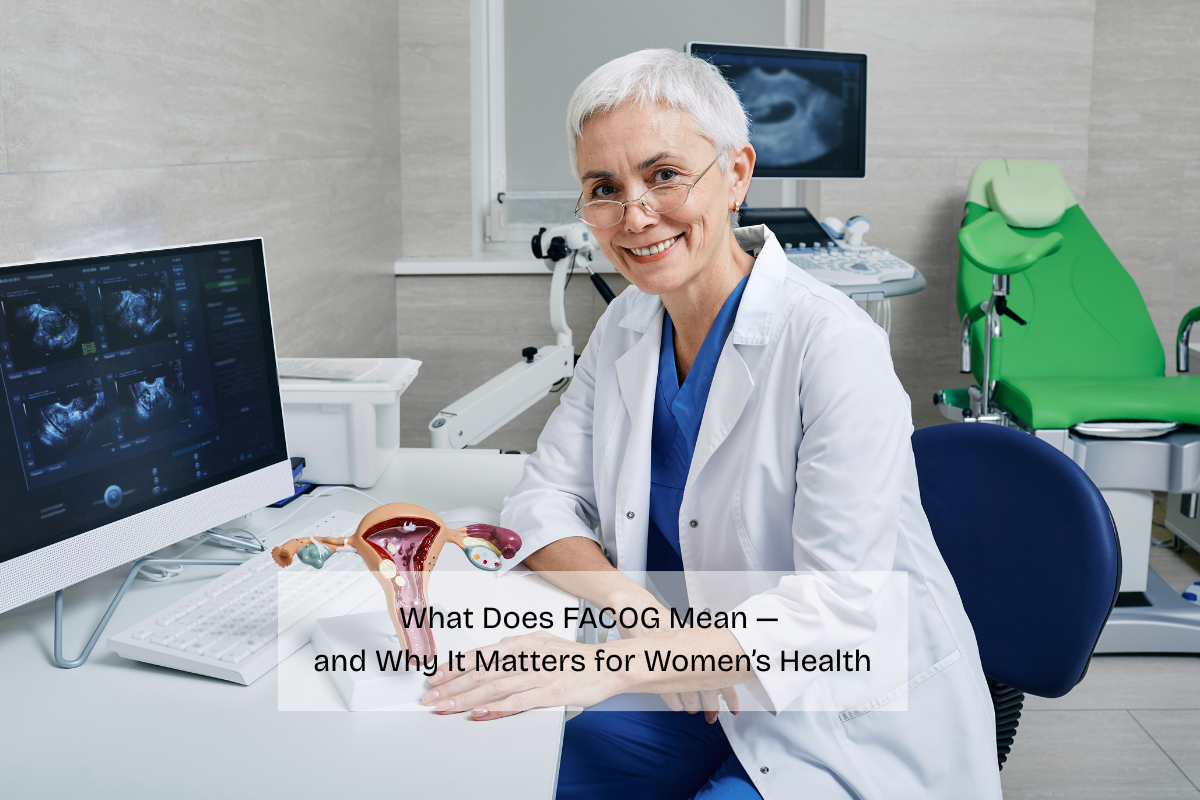
What Does FACOG Mean — and Why It Matters for Women’s Health
By: Alliance Ob/Gyn in Alpharetta, GA
When choosing a healthcare provider, you may come across a variety of credentials after a doctor’s name — MD, DO, FACS… and sometimes FACOG. But what exactly does FACOG mean, and why should it matter to you? At Alliance OB/GYN, we believe that informed patients make empowered health decisions. Understanding the qualifications of your provider is part of that journey.
In short, FACOG stands for Fellow of the American College of Obstetricians and Gynecologists. It’s an advanced designation that reflects both specialized expertise and a commitment to high standards of care in the fields of obstetrics and gynecology.
But there’s more to it than simply letters — FACOG represents a deep level of training, ongoing education, and dedication to women’s health. Here’s a comprehensive look at what FACOG means and why it should matter to you.
Breaking Down the Acronym: What FACOG Stands For
- F – Fellow
- A – of the
- COG – American College of Obstetricians and Gynecologists
When a physician has FACOG after their name, it means they are board-certified in Obstetrics and Gynecology and also an active member in good standing of The American College of Obstetricians and Gynecologists (ACOG).
ACOG is the professional organization of OB-GYNs in the United States, dedicated to the advancement of women’s health care through standards of practice, continuing education, research, advocacy, and professional support.
How Physicians Earn the FACOG Designation
The FACOG title isn’t automatic – it requires a series of educational and professional milestones:
1. Medical Degree and Residency Training
Before anything else, every physician with FACOG is a medical doctor (MD) or doctor of osteopathic medicine (DO). After medical school, they complete an accredited residency program in Obstetrics and Gynecology, which typically takes four years and includes intensive clinical training in:
- Prenatal care and delivery
- Gynecologic surgery and management
- Reproductive endocrinology
- Adolescent and menopausal care
- Cancer screening and prevention
- Preventive health services
This training gives OB-GYNs a broad foundation in both surgical and medical care for women from adolescence through menopause and beyond.
2. Board Certification
After residency, physicians pursue board certification in OB-GYN through the American Board of Obstetrics and Gynecology (ABOG). To become board-certified, physicians must:
- Pass a rigorous written examination
- Successfully complete an oral examination
- Demonstrate continued competency throughout their career
Board certification confirms that a physician has met nationally recognized standards of knowledge and skill.
3. Membership and Fellowship in ACOG
Once board certification is achieved, physicians can apply for membership in ACOG. When accepted and maintained in good standing, board-certified OB-GYNs earn the Fellow designation — hence, FACOG.
Maintaining FACOG status requires ongoing involvement in ACOG activities, adherence to professional standards, and regular engagement with continuing medical education.
Why the FACOG Designation Matters for Patients
You might be wondering: Does having FACOG really affect patient care? The answer is yes — in several important ways:
1. Assurance of Expertise
A FACOG physician has met strict national standards in training and evaluation. That means you can have confidence that your provider has:
- Comprehensive training in women’s health
- Expertise in both obstetrics and gynecology
- Up-to-date clinical knowledge
This matters whether you are planning a pregnancy, navigating perimenopause, or addressing chronic gynecologic conditions.
2. Commitment to Best Practices
ACOG regularly publishes clinical guidelines and practice bulletins based on the latest scientific evidence. Physicians with FACOG actively engage with these resources, ensuring that the care they provide reflects current standards of excellence.
3. Ongoing Professional Development
Medicine is always evolving. Treatments for conditions like fibroids, endometriosis, and urinary incontinence continue to advance. FACOG physicians are required to pursue continuing education and stay engaged with emerging research and best practices.
This ongoing learning directly benefits patients — especially when it comes to accurate diagnosis, effective treatment options, and preventive care.
4. Enhanced Advocacy for Women’s Health
ACOG is not only a medical organization — it is an advocacy body. It works on shaping public health policy, expanding access to care, and protecting reproductive health rights. When your OB-GYN holds FACOG, they are not just clinically qualified — they are connected to a broader mission of improving women’s health at the community and national level.
How FACOG Differs From Other Credentials
You may see other designations like:
- MD or DO — indicates the type of medical degree
- Board Certified — signifies completion of residency and passing of national exams
- FAAP — Fellow of the American Academy of Pediatrics (another specialty)
Of these, FACOG specifically denotes specialization in women’s health with active membership in ACOG. It goes beyond a basic certification to affirm engagement with a professional community dedicated to excellence.
What This Means for Your Care at Alliance OB/GYN
At Alliance OB/GYN, our board-certified physicians proudly carry the FACOG designation. That means:
- You are cared for by clinicians trained and tested to the highest standards in women’s health.
- Your care team is committed to evidence-based practices.
- You can trust that your provider engages in ongoing learning and professional excellence.
- You are supported by a practice aligned with a leading national professional organization focused solely on women’s health.
Whether you’re here for routine annual care, expecting a baby, managing a complex condition, or looking for guidance through hormonal changes, our providers bring FACOG-level expertise to every visit.
Making Informed Choices About Your Health
Healthcare decisions are deeply personal, and choosing a provider is one of the most important steps you can take. Credentials like FACOG help you see what lies behind the name — the years of training, commitment to excellence, and dedication to patient-centered care.
At Alliance OB/GYN, we believe that every patient deserves clarity, respect, and the highest quality of care. If you have questions about provider qualifications or how our team can support your health, we’re here to help.
Your health. Your goals. Expert care you can trust.