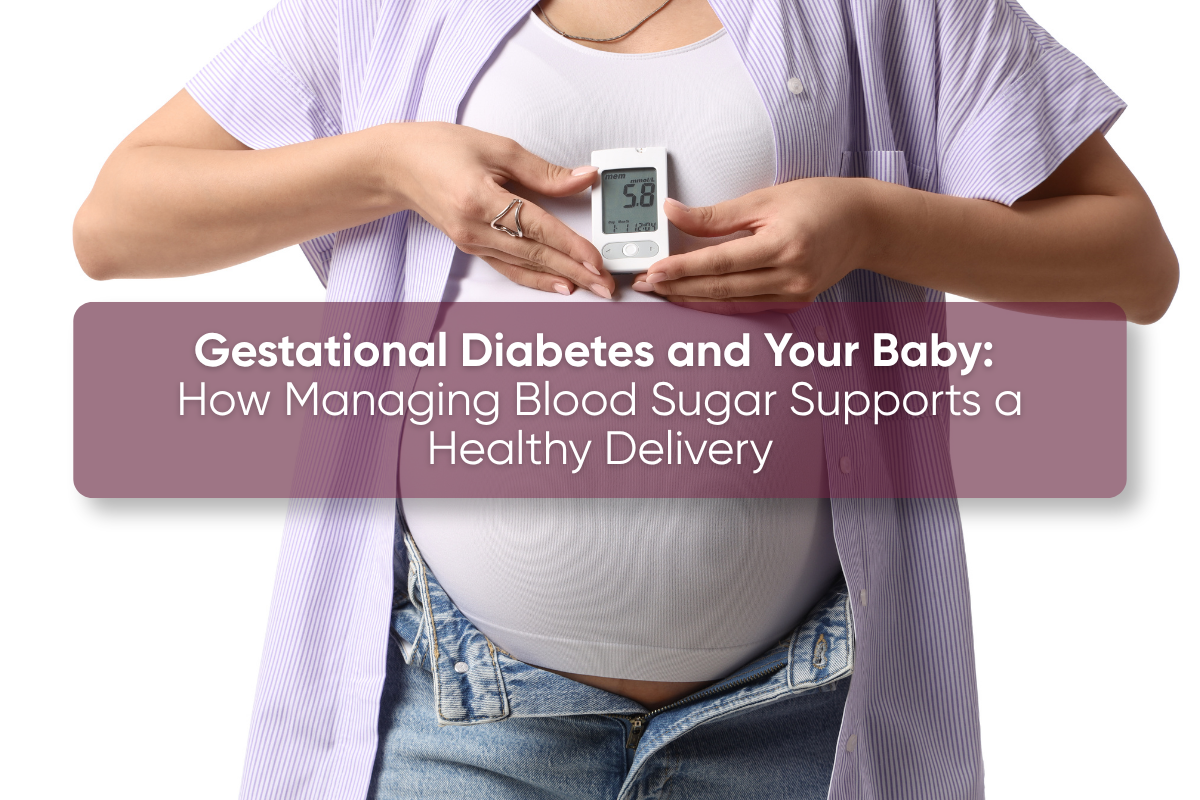
Gestational Diabetes and Your Baby: How Managing Blood Sugar Supports a Healthy Delivery
From the moment you find out you’re expecting, your thoughts naturally turn to your baby. Is everything developing the way it should? What can I do to give this little one the healthiest start? So when you hear the words “gestational diabetes,” whether from a friend, a family member, or your own doctor, it’s understandable that your first question is about your baby.
The reassuring truth is this: when gestational diabetes is found and managed, the vast majority of women go on to have healthy pregnancies, healthy deliveries, and healthy babies. In honor of American Diabetes Month this November, the board-certified physicians at Alliance Ob/Gyn want to help you understand how blood sugar affects your baby and why the steps you take make such a meaningful difference.
What Is Gestational Diabetes?
Gestational diabetes is high blood sugar that develops during pregnancy. As your pregnancy progresses, the placenta produces hormones that make it harder for your body to use insulin, the hormone that moves sugar from your blood into your cells. When your body can’t produce enough extra insulin to keep up, blood sugar rises. It affects up to 10 percent of pregnancies in the United States, and it isn’t caused by anything you did wrong.
How Blood Sugar Affects Your Baby
Sugar in your bloodstream passes through the placenta to your baby, but insulin does not. When your blood sugar runs high, your baby receives extra sugar and responds by producing more of their own insulin. That extra sugar and insulin act like fuel for growth, which is why unmanaged gestational diabetes can lead to:
- A larger-than-average baby, which can make vaginal delivery more difficult and raise the chance of a cesarean birth or a birth injury
- Low blood sugar in the baby right after birth, since their body is still producing extra insulin
- Breathing difficulties or jaundice in the first days of life
- A higher chance of preterm birth
- A greater risk of childhood obesity and type 2 diabetes later in life
For moms, unmanaged gestational diabetes also raises the risk of high blood pressure and preeclampsia during pregnancy.
Reading a list like this can feel scary, so please hold on to the most important part: managing your blood sugar significantly lowers every one of these risks.
How Managing Blood Sugar Supports a Healthy Delivery
When blood sugar stays in a healthy range, your baby is more likely to grow at a steady, healthy pace. That brings real benefits on delivery day and beyond:
- A better chance of a smooth vaginal birth, since gestational diabetes on its own isn’t a reason for a cesarean
- More time for your baby to grow, as the American College of Obstetricians and Gynecologists (ACOG) generally supports waiting until at least 39 weeks when blood sugar is well controlled
- Steadier blood sugar for your newborn in the hours after birth
- Fewer complications for you, including a lower risk of preeclampsia
| “Dr. Hsiao is the best physician at the practice. He has a wonderful bedside manner, and makes you feel welcomed (important for a plus-size mama-to-be). I did research prior to selecting an OB for my second pregnancy, and everything I read about him online is true—he’s the reason I’m at Alliance!” Alliance OB/GYN Patient Testimonial |
What Managing Gestational Diabetes Looks Like
If you’re diagnosed, your obstetric provider will help you build a plan. For most women, that plan includes:
- Checking blood sugar at home, usually first thing in the morning and after meals
- Eating balanced meals and snacks throughout the day, pairing carbohydrates with protein
- Staying active with gentle exercise, like a short walk after meals
- Medication, such as insulin, if diet and activity aren’t enough on their own
- Extra monitoring of your baby’s growth in the later months of pregnancy
Many women are able to manage gestational diabetes with food and activity alone. If medication is needed, it’s a safe and effective way to protect you and your baby, not a sign that you’ve done anything wrong.
When Screening Happens, and Why Early Matters for Some Women
Following ACOG guidance, most pregnant women are screened for gestational diabetes between 24 and 28 weeks. However, some women benefit from earlier testing in the first trimester, especially those with certain risk factors, such as:
- Gestational diabetes in a previous pregnancy
- Carrying extra weight before pregnancy along with other risk factors
- A family history of type 2 diabetes
- High blood pressure or a history of heart disease
- PMOS (polyendocrine metabolic ovarian syndrome), the condition formerly known as PCOS, which is closely linked to insulin resistance
At Alliance Ob/Gyn, we focus our obstetric care on the first trimester, providing pregnancy confirmation with physician-performed ultrasound and evaluation of early pregnancy concerns. Those early visits are a great time to talk about your personal risk factors and whether early screening makes sense for you, so you can carry that plan forward with the obstetrician who will follow you through delivery. You can learn more about our obstetric services.
Before Pregnancy: Setting the Stage
If you’re thinking about becoming pregnant, a preconception visit is one of the best ways to lower your risk. Your doctor can review your health history, check your blood sugar if you have risk factors, and help you get conditions like PMOS under control before you conceive. Learn more about polycystic ovarian syndrome care and family planning at our practice.
After Your Baby Arrives
For most women, gestational diabetes goes away after delivery. But having had it raises your chance of developing type 2 diabetes in the future. ACOG recommends a glucose test 4 to 12 weeks after birth and regular screening every one to three years after that.
That’s where ongoing gynecologic care comes in. Your annual well woman examination is the perfect opportunity to stay on top of screening, talk about family planning, and keep the healthy habits you built during pregnancy working for you long term.
Personal Care in a Small-Practice Setting
At Alliance Ob/Gyn, we combine the latest technology with a small-practice setting, which allows us to build a personal, one-to-one relationship with every patient. Both of our physicians, Dr. Elbridge F. Bills, II and Dr. Clement C. Hsiao, are board-certified and Fellows of the American College of Obstetricians and Gynecologists (FACOG), a designation that reflects their commitment to the highest standards in women’s health. You can read more about why board certification matters.
| “Dr. Hsiao answered all my questions very seriously and patiently, and fully relieved my anxiety and gave the most reasonable treatment plan. Dr. Hsiao answered all my questions very seriously and patiently, and fully relieved my anxiety and gave the most reasonable treatment plan. I recommend Dr. Hsiao 100% for taking care of me and my baby patiently.” Alliance OB/GYN Patient Testimonial |
Whether you’re planning a pregnancy, newly pregnant, or caring for your health after having a baby, call Alliance Ob/Gyn at (770) 777-4933 to schedule a visit. Same-day appointments are available, and our team is here to help you and your family get off to the healthiest possible start.